What to Pack for a Train Trip: Complete USA Travel Guide
Planning a rail journey can be exciting, whether you are taking a short trip between nearby cities or preparing for a long-distance adventure across the United States. One of the easiest ways to make the experience more comfortable is to pack thoughtfully before leaving home.
If you are wondering what to pack for a train trip, focus on items that will keep you comfortable, organized, entertained, and prepared throughout the journey.
Unlike a short commute, a longer train ride may involve several hours onboard. Overnight journeys can require additional clothing, toiletries, sleeping accessories, and other personal items.
At the same time, bringing too much luggage can make boarding and managing your belongings unnecessarily difficult.
This complete train trip packing list covers travel documents, luggage, food, electronics, clothing, comfort items, overnight essentials, family travel, and practical tips for train travel in the USA.
If you are still planning your journey, our complete guide to booking train tickets online can help you understand the reservation process before you start packing.
If your business trip could also be completed by air, you can explore available flight options and compare the schedule with your rail journey before deciding how to travel.
Essential Train Trip Packing List
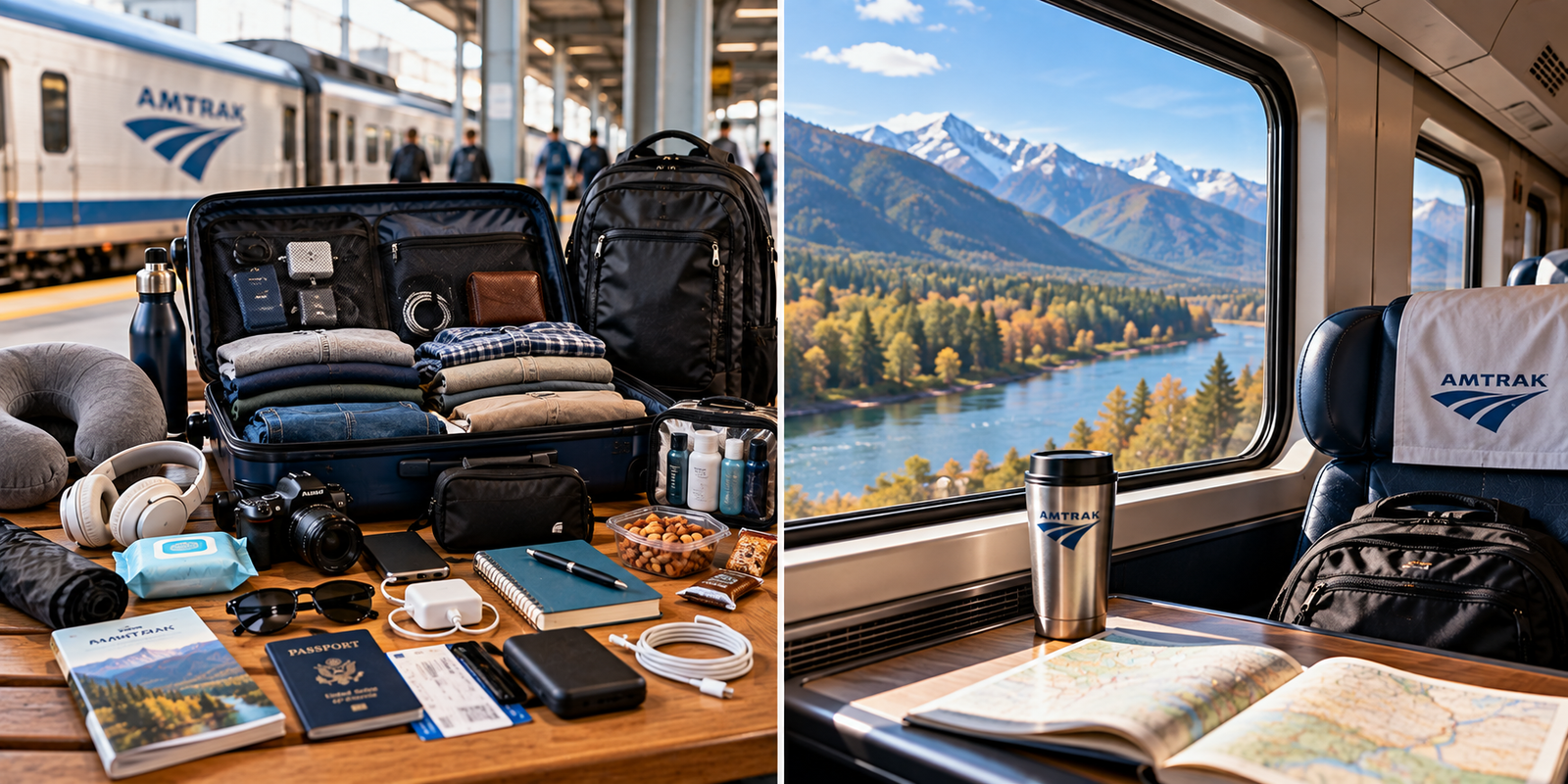
Your exact packing list will depend on the length and type of journey, but most travelers should consider carrying these essentials:
- Train ticket or eTicket
- Valid identification
- Wallet and payment method
- Smartphone
- Charging cable
- Portable power bank
- Essential medications
- Water bottle
- Snacks
- Headphones
- Comfortable clothing
- Light jacket or sweater
- Personal hygiene products
- Book, tablet, or other entertainment
Keep your most important items in a personal bag or backpack that remains easy to access during the journey.
Larger luggage should contain belongings that you will not need frequently while traveling.
1. Keep Your Train Ticket Accessible
Your ticket should be one of the easiest items to access.
If you are using an electronic ticket, make sure your phone has enough battery before leaving for the station.
Saving an offline copy or screenshot of important reservation details can also be useful if internet connectivity becomes limited.
Before departure, review your:
- Travel date
- Departure station
- Destination station
- Train number
- Departure time
- Arrival time
- Seat or accommodation details
This is particularly important in cities with multiple rail stations.
Arriving at the wrong station can create unnecessary stress even when everything else about your trip is properly planned.
2. Carry Valid Identification
Keep an accepted form of identification with your important travel documents.
Do not place essential identification inside luggage that may be stored somewhere difficult to access during the journey.
A small wallet, travel organizer, or secure pocket can be useful for keeping identification, payment cards, and other important documents together.
International travelers should also carry any travel documents required for their specific itinerary.
Check applicable requirements before leaving rather than assuming every train journey has identical documentation rules.
3. Choose Practical Luggage
Choosing the right luggage is just as important as deciding what goes inside it.
For a short train trip, a backpack or small carry-on may be enough.
For longer journeys, you may need a suitcase in addition to your personal bag.
The key is to choose luggage you can comfortably manage.
Avoid bringing an oversized suitcase filled with items you are unlikely to use.
Depending on the train operator, route, station, and ticket type, baggage allowances and checked baggage availability can vary.
Review the baggage rules for your specific journey before packing.
Adding an identification tag to your luggage is also a useful precaution.
4. Pack Snacks and Water
Food is an important part of a practical train travel essentials list.
Some trains provide food and beverage service, while others may have limited options.
Bringing your own snacks gives you more flexibility.
Consider easy-to-eat foods such as:
- Granola bars
- Crackers
- Fruit
- Sandwiches
- Nuts
- Cookies
- Other personal snacks
Choose food that is easy to store and does not create a large mess.
A reusable water bottle can also be useful during a longer journey.
If you have specific dietary needs, carrying appropriate food becomes even more important.
Do not assume that every train will have the exact food options you want.
5. Bring Your Phone and Charger
Your smartphone can be one of your most useful train journey essentials.
You may use it for your ticket, reservation information, maps, entertainment, communication, photos, or checking travel updates.
Always pack the correct charging cable.
If you are traveling for several hours, a portable power bank can provide additional backup.
Other useful electronics may include:
- Laptop
- Tablet
- E-reader
- Smartwatch charger
- Headphones
- Power adapter
Keep expensive electronics in your personal bag rather than leaving them unattended.
6. Download Entertainment in Advance
A long train ride can provide plenty of time to relax.
Before departure, download entertainment that does not require a constant internet connection.
Options can include:
- Movies
- TV shows
- Podcasts
- Music
- Audiobooks
- E-books
- Offline games
A physical book is another simple option that requires no battery or internet connection.
Headphones are particularly important if you plan to watch videos or listen to music.
Internet connectivity can vary during rail travel, so preparing offline entertainment means you will have something to do even when the connection is limited.
7. Wear Comfortable Clothing
Comfort should be a priority when deciding what to wear on a train trip.
Choose clothing that allows you to sit comfortably for an extended period.
Layering is usually practical because the temperature onboard may feel different from the weather outside.
Consider wearing or packing:
- Comfortable pants
- T-shirt
- Sweater or hoodie
- Light jacket
- Comfortable shoes
- Extra socks
Avoid clothing that becomes uncomfortable after sitting for several hours.
You should also check the weather at your destination before deciding what additional clothing to pack.
8. Bring Personal Hygiene Items
A small toiletry bag can be extremely useful on longer journeys.
Useful personal care items may include:
- Toothbrush
- Toothpaste
- Hand sanitizer
- Tissues
- Deodorant
- Lip balm
- Moisturizer
- Hairbrush or comb
- Face wipes
You probably do not need your entire bathroom cabinet.
Travel-sized products can help reduce the amount of space your toiletries occupy.
Keep the items you expect to use onboard somewhere accessible rather than at the bottom of your largest suitcase.
9. Keep Medication With You
Essential medication should remain accessible throughout the journey.
Do not pack medication that you may need during the trip somewhere you cannot easily reach.
Bring enough for your scheduled journey and consider possible delays when deciding how much you need.
Other personal health items may include:
- Prescription glasses
- Contact lens supplies
- Personal medical equipment
- Basic first-aid items
- Any other essential health products
If an item requires special handling or storage, check the applicable travel policies before departure.
What to Pack for a Short Train Trip
A short journey usually does not require much luggage.
For a trip lasting only a few hours, you may only need:
- Ticket
- Identification
- Phone
- Charger
- Wallet
- Water
- Small snack
- Headphones
- Light jacket
A small backpack may be enough.
Avoid packing as though you are taking an overnight journey when you will only be onboard for a short period.
Traveling light can make boarding and leaving the train much easier.
What to Pack for a Long Train Ride
Long-distance rail travel requires more planning.
In addition to your basic essentials, consider bringing:
- Extra clothing
- Toiletries
- Multiple snacks
- Refillable water bottle
- Entertainment
- Power bank
- Comfortable layers
- Travel pillow
- Eye mask
- Earplugs
Organize your belongings according to when you will use them.
Items needed during the journey should remain in your personal bag, while clothing for your destination can stay inside your main luggage.
This simple organization can save you from repeatedly opening your suitcase.
Overnight Train Packing List
If your journey continues overnight, comfort becomes more important.
An overnight train packing list may include:
- Travel pillow
- Lightweight blanket
- Eye mask
- Earplugs
- Comfortable sleep clothing
- Extra socks
- Toothbrush and toothpaste
- Basic toiletries
- Medication
- Water
- Snacks
- Phone charger
Passengers using private sleeping accommodations may have additional amenities included with their reservation.
Check what your accommodation provides before packing so you do not bring unnecessary items.
What to Pack When Traveling in Coach
Coach travelers should prioritize organization and comfort.
Keep your phone, water, snacks, headphones, charger, medication, and other frequently used belongings close by.
A small travel pillow can be useful on longer journeys.
If you tend to feel cold, pack a light blanket or extra layer.
Avoid spreading too many personal belongings around your seating area.
A compact, organized personal bag can make the journey much more convenient.
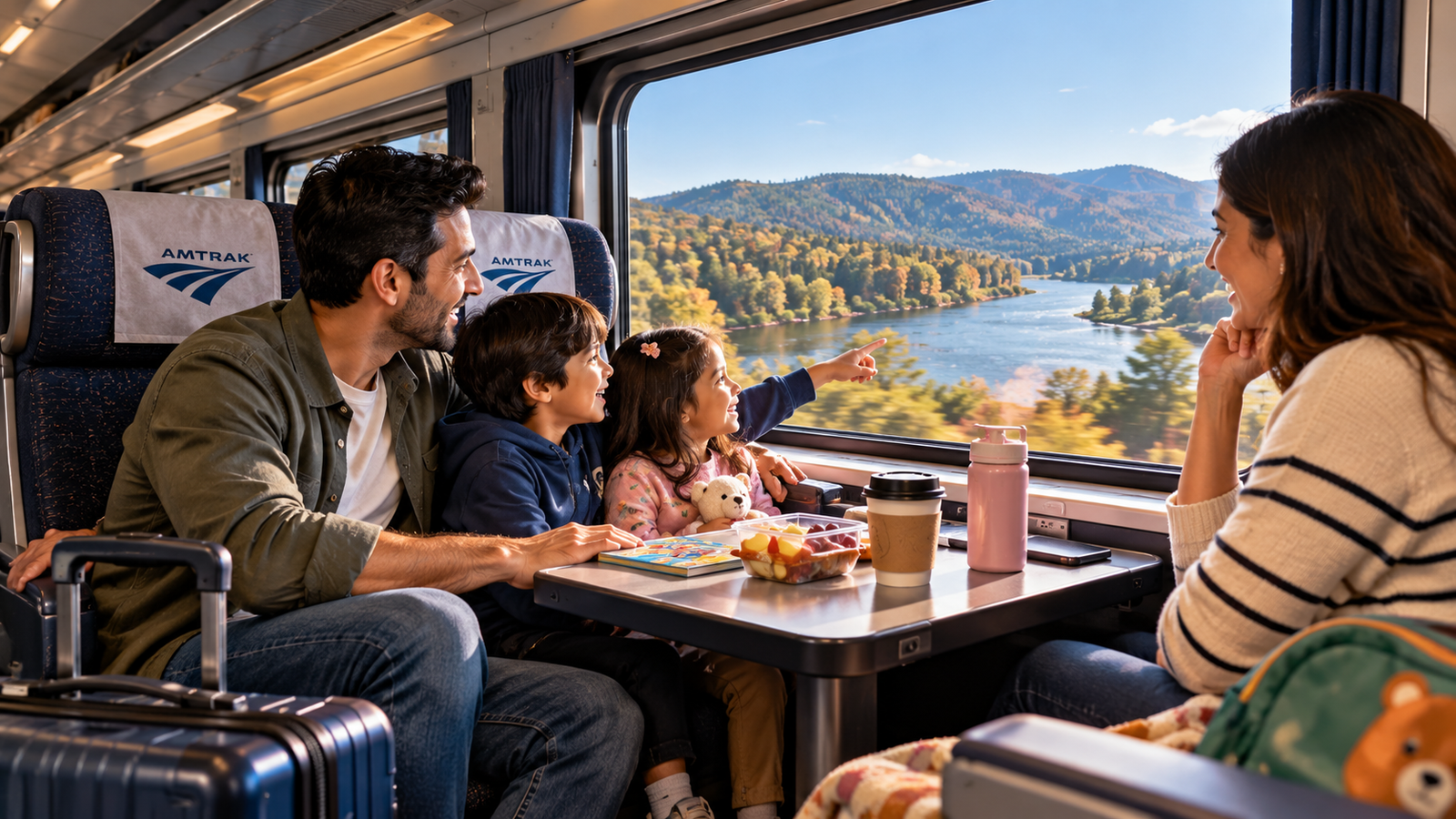
What to Pack for a Train Trip With Kids
Traveling with children requires additional preparation.
Depending on the child’s age, parents may want to pack:
- Snacks
- Water
- Spare clothing
- Wipes
- Diapers
- Small toys
- Coloring materials
- Books
- Downloaded shows
- Child-friendly headphones
Keep essential family items in a bag that is easy to reach.
For longer journeys, bringing several different entertainment options can help prevent boredom.
Avoid packing only electronic entertainment. Books, puzzles, drawing materials, and small games can provide useful alternatives.
What to Pack for a Business Train Trip
Train travel can be convenient for business travelers moving between major cities.
If you plan to work onboard, consider bringing:
- Laptop
- Laptop charger
- Phone charger
- Headphones
- Portable power bank
- Notebook and pen
- Important documents
- Business clothing
- Personal toiletries
Download important documents before departure so you are not completely dependent on internet connectivity.
Keep valuable electronics with you throughout the journey.
If you need to attend a meeting soon after arrival, consider carrying essential clothing in your personal luggage rather than placing everything in checked baggage.
What Not to Pack for a Train Trip
Packing well is also about knowing what to leave behind.
Avoid bringing excessive clothing, unnecessary electronics, large quantities of food, or items you are unlikely to use.
Train operators can also restrict hazardous materials and certain other belongings.
If you plan to travel with unusual equipment, oversized luggage, sporting equipment, or another special item, check the applicable rules before arriving at the station.
Never assume an item is allowed simply because it fits inside your suitcase.
Common Train Packing Mistakes
One of the biggest mistakes is overpacking.
More luggage means more belongings to manage while boarding, storing bags, moving through the station, and leaving the train.
Another common mistake is placing important items somewhere difficult to access.
Keep your identification, ticket, medication, phone, wallet, and charger close to you.
Travelers may also rely too heavily on onboard Wi-Fi or food availability.
Downloading entertainment and bringing a few snacks can help you prepare for differences between trains.
Finally, avoid packing without checking the weather at your destination.
Planning ahead can also help with ticket costs, so check our guide on how to find cheap train tickets before finalizing your travel plans.
How to Pack Light for Train Travel
Packing light can make rail travel significantly easier.
Choose clothing that can be worn in different combinations rather than packing a separate outfit for every possible situation.
Use travel-sized toiletries.
Bring one versatile entertainment device instead of several electronics if possible.
Organize charging cables together in a small pouch.
Choose a few practical snacks rather than filling an entire bag with food.
Most importantly, ask yourself whether you are actually likely to use each item during your trip.
If the answer is no, consider leaving it at home.
First-Time Train Travel Packing Tips
First-time passengers should prepare their bags at least a little before departure rather than waiting until the last minute.
Create a simple checklist and separate essential items from everything else.
Charge your phone and other devices before leaving home.
Download your entertainment.
Check your reservation details.
Confirm the station location.
Review your train’s baggage and onboard amenities.
Pack snacks and water if appropriate.
These simple steps can make your first rail journey feel much more organized.
Final Thoughts
Knowing what to pack for a train trip can make the difference between a stressful journey and a comfortable travel experience.
Start with the essentials: your ticket, identification, wallet, medication, phone, charger, water, snacks, and comfortable clothing.
Then adjust your train trip packing list according to the journey.
A short regional trip may require only a backpack, while a long-distance or overnight journey may require toiletries, additional clothing, entertainment, and sleeping accessories.
Keep important belongings accessible and avoid carrying more luggage than you can comfortably manage.
Most importantly, check the baggage rules and available amenities for your specific train before departure.
With a practical packing strategy, you can spend less time managing your belongings and more time enjoying your rail journey.
Frequently Asked Questions
What should I pack for my first train trip?
Bring your ticket, identification, wallet, phone, charger, essential medication, water, snacks, comfortable clothing, and entertainment suitable for the length of your journey.
What should I pack for a long train ride?
For a long journey, consider extra clothing, toiletries, snacks, water, a charger, power bank, entertainment, travel pillow, eye mask, and other comfort items.
What should I bring on an overnight train?
An overnight train packing list can include comfortable clothing, a travel pillow, lightweight blanket, eye mask, earplugs, toiletries, medication, water, snacks, and chargers.
Should I bring food on a train trip?
Bringing a few snacks can be useful, especially on longer journeys. Food availability varies between trains and routes.
Do I need a suitcase for a train trip?
Not necessarily. A short journey may only require a backpack or small carry-on, while longer trips may require additional luggage.
Should I bring a power bank on a train?
A power bank can be a useful backup for your phone and other electronics, particularly during a long journey.
What should I wear on a long train ride?
Wear comfortable clothing and consider layers so you can adjust if the onboard temperature feels warmer or cooler than expected.
What should kids bring on a train trip?
Useful items include snacks, water, spare clothing, books, small toys, coloring materials, headphones, and downloaded entertainment.
What should I keep in my personal bag?
Keep your ticket, identification, wallet, medication, phone, charger, water, snacks, and valuable electronics easily accessible.
How can I avoid overpacking for a train trip?
Choose versatile clothing, use travel-sized toiletries, limit unnecessary electronics, organize your essentials, and pack according to the actual length of your journey.